
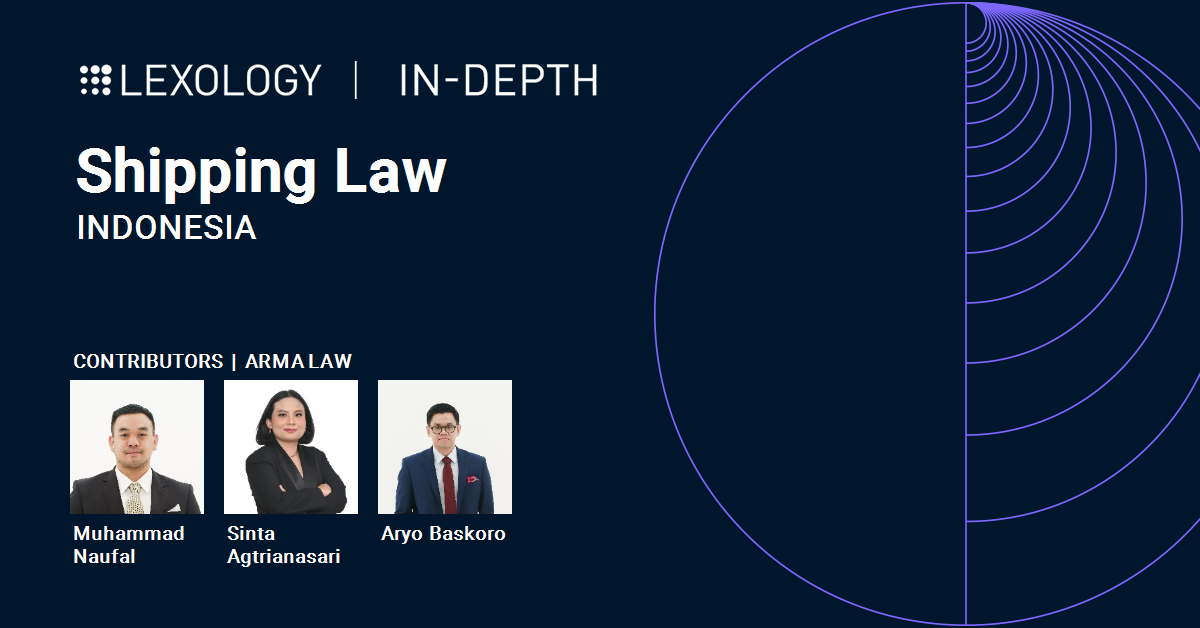

Authors
Read the full publication here: Lexology.com
Disclaimer:
This client update is the property of ARMA Law and intended for providing general information and should not be treated as legal advice, nor shall it be relied upon by any party for any circumstance. ARMA Law has no intention to provide a specific legal advice with regard to this client update.
Related Updates
Bank Indonesia has confirmed that the automatic exemption from the mandatory use of Rupiah for vessel charter transactions will expire on 30 June 2026 and will not be further extended. Instead, a one-year transition period until 30 June 2027 has been introduced for eligible shipping companies previously covered by the exemption, during which they may continue relying on the existing approval while preparing for compliance. Companies seeking to continue using foreign currency beyond the transition period must submit a new application supported by comprehensive documentation, signalling a shift toward a more selective, case-by-case exemption regime. This development requires shipping companies to reassess their contractual arrangements, evaluate the need for a renewed exemption, and prepare for the eventual implementation of Indonesia’s mandatory Rupiah requirements.
Cargo claims frequently turn on the allocation of risk between carriers, shipowners, shippers, and cargo interests under both statutory and contractual frameworks. This update explores the Indonesian legal regime governing cargo claims, covering key issues such as title to sue, carriers’ liability, limitation of liability, time bars, and practical measures for mitigating exposure in maritime cargo disputes.
Indonesia’s shipping law framework has evolved significantly from the traditional provisions under the Indonesian Commercial Code and Civil Code to a more comprehensive regime under the Indonesian Shipping Law. This legal development strengthens regulatory certainty across key maritime areas, including safety, ship ownership, cabotage principles, port operations, and seafarers’ welfare, supporting Indonesia’s ambition to become a competitive global maritime hub. The article examines recent regulatory developments and their practical implications for businesses involved in Indonesia’s maritime and shipping industry.
Latest Updates
Minister of Agriculture Regulation No. 18 of 2026 sets the procedures for carbon trading through GHG emission offsets in the agriculture sector. This update covers who may trade, farmer partnerships and benefit-sharing, the approval and Authorization pathways, and what existing projects need to do.
On 29 April 2026, the OJK issued OJK Regulation No. 5 of 2026, introducing significant reforms to the long-standing licensing and regulatory framework for Investment Managers. This ARMA Update highlights the key changes, particularly the introduction of a business activity-based licensing classification that aligns the Investment Manager licensing regime with that of other securities companies.